On the afternoon of September 22, that is when we finally made the decision to leave LinkedIn for good. We joined LinkedIn back in March to April of 2013. Since then, we have both benefitted greatly from being on this platform, while also watched it drive itself into the ground in recent years. LinkedIn isn’t the first social media/networking platform that we have quitted for good in recent years. It’s just the most recent one, and admittedly, the hardest one for us to quit. But we’re also glad that we finally found the courage and the will to do it. Since 2022, we have already been making efforts to quit different platforms, ranging from Facebook, X, TikTok, Instagram, Substack and then now, LinkedIn. Most of these platforms share a couple of things in common, but we’ll get into that in just a moment. Today, the only platforms where we still maintain an active profile are YouTube (mainly for consuming meaningful content and staying connected to the world), Medium (for keeping in touch and up-to-date on the writings by some of our favourite design/technical writers), and Bluesky (it’s basically what Twitter used to be, and it’ll be the main place for us to share our blog posts, and the occasional random thoughts).
We like to take this moment to be clear that this blog post is not about attempting to shit on the platform that has somehow lost its way in recent years. Instead, we are genuinely grieving our decision to leave the platform after having invested much of our professional energy and attention into it for the past 13 years (more than half of our professional career so far). LinkedIn was [originally] intended as a professional networking platform. At least that is what it started out as. It was also part of the reason why it worked really well for so many years (not only for us personally). But for reasons that elude us, its creators decided at some point that this successful professional networking community should start to position itself more like a social networking platform rather than a professional one. It still brands itself as a professional networking platform today, but if you have been there a decade ago, you’ll know that this current branding is but a shell of its past.
For a time, LinkedIn had earned our Trust.
Even though we joined this platform in 2013, we were not immediately active on it. Not until late-2014. The reason? Well, we were genuinely unsure about whether or not it would be worth it to invest our time and energy into a platform. Every single one of us shares the same number of hours in a day. Minus sleep, meal times, and everything else in between, most of us are only left with roughly 8 to 10 hours of truly useful time. How we spend those 8 to 10 hours matters more than we will ever realize.
Prior to being a part of the online community, we had spent the first 7-8 years of our career focusing mostly on our craft and the work that we wanted to do. Yes, you could say that we were pretty isolated to some degree. But not in that “we are all alone” kind of way either. Like any master craftsman, we just preferred to focus on our work in solitude. Because it is usually in solitude that we produce some of our most amazing pieces of work too. And when the timing was right, we would allow our work to speak for themselves.
That is basically what happened around the end of 2014, going into 2015 and 2016. Between the years of 2015 to 2018, our work had its time to shine on the professional stage. We were traveling, giving talks, conducting keynotes, workshops and trainings. We were coaching and mentoring designers and engineers all across the Asia Pacific during that period of time. Frankly, now that we had the chance to sit down and reflect on it, those were the truly golden years of LinkedIn too. We could not have timed it more perfectly.
For about 4-5 years, you could say that LinkedIn as a brand, and as an online platform had truly earned our trust. And we were happy and fulfilled when it comes to investing our time into it. It was worth it while it lasted.
And then…something started to change.
We have to be absolutely honest that we couldn’t remember it, or point to a very specific point in time when everything felt like it had changed. Post-2018, LinkedIn began to shift. Its changes were not big, or obvious, or all-at-once. It felt more like a slow-rolling increment shift that eventually turned this once incredible professional networking platform into an engagement machine — optimized for performance, not connection. Somewhere along the way, the algorithm stopped rewarding substance and started rewarding volume. Posting for visibility instead of posting because you had something worth saying. Reactions over reflection. Reach over relationships.
We started to notice more people performing their careers than actually building them out loud. Broetry. Manufactured vulnerability. Engagement bait dressed up as thought leadership. The professional networking platform was slowly becoming a stage — and we never signed up to perform.
Finally, came the noise.
Between the time just after we had came out of the recent 2020 global pandemic, AI had also just arrived onto the scene. It was around this moment that everything really spun out. If you thought infinite scrolling and addictive algorithms were bad, things were about to get a whole lot worse.
The loudest voices started to dominate — and the loudest voices are rarely the most representative. A vocal minority, sitting at the extreme ends of the spectrum — AI hype on one end, AI doomerism on the other — began to crowd out the more grounded, nuanced middle. And an algorithm built to reward engagement will always favor the extreme over the thoughtful, because outrage and hype both tend to perform better than nuance ever will.
At the same time, the feed started to flood. AI made it cheap — almost effortless — to produce content at a volume no human pace could match. We won’t use the word everyone else has already worn out for it, but we think you know exactly what we mean. And in a feed already built on infinite scroll and algorithmic amplification, that flood didn’t just add noise — it drowned out whatever signal was left.
Just in the last few weeks alone, we had begun to leave several of the LinkedIn groups that we were previously a part of. It was just starting to become too much for us to handle.
Here’s the thing, we do not see the people, or the content being shared as the root cause of what we’ve been experiencing (collectively) as an online community. Instead, we believed that the root problem lies with how the platform has been designed and engineered in the years preceding the golden age. We truly do not know if this is something that can be fixed. Maybe it can be. But that kind of change/transformation will require the kind of corporate will that we’re honestly unsure the organisation has.
That said, we’ve come to recognise that we cannot wait, in the hopes that LinkedIn might somehow get its act together. It might, it might not. Regardless of what direction they decide to take as an online platform, we know that in this present moment, it is no longer working for us.
Where do we go from here?
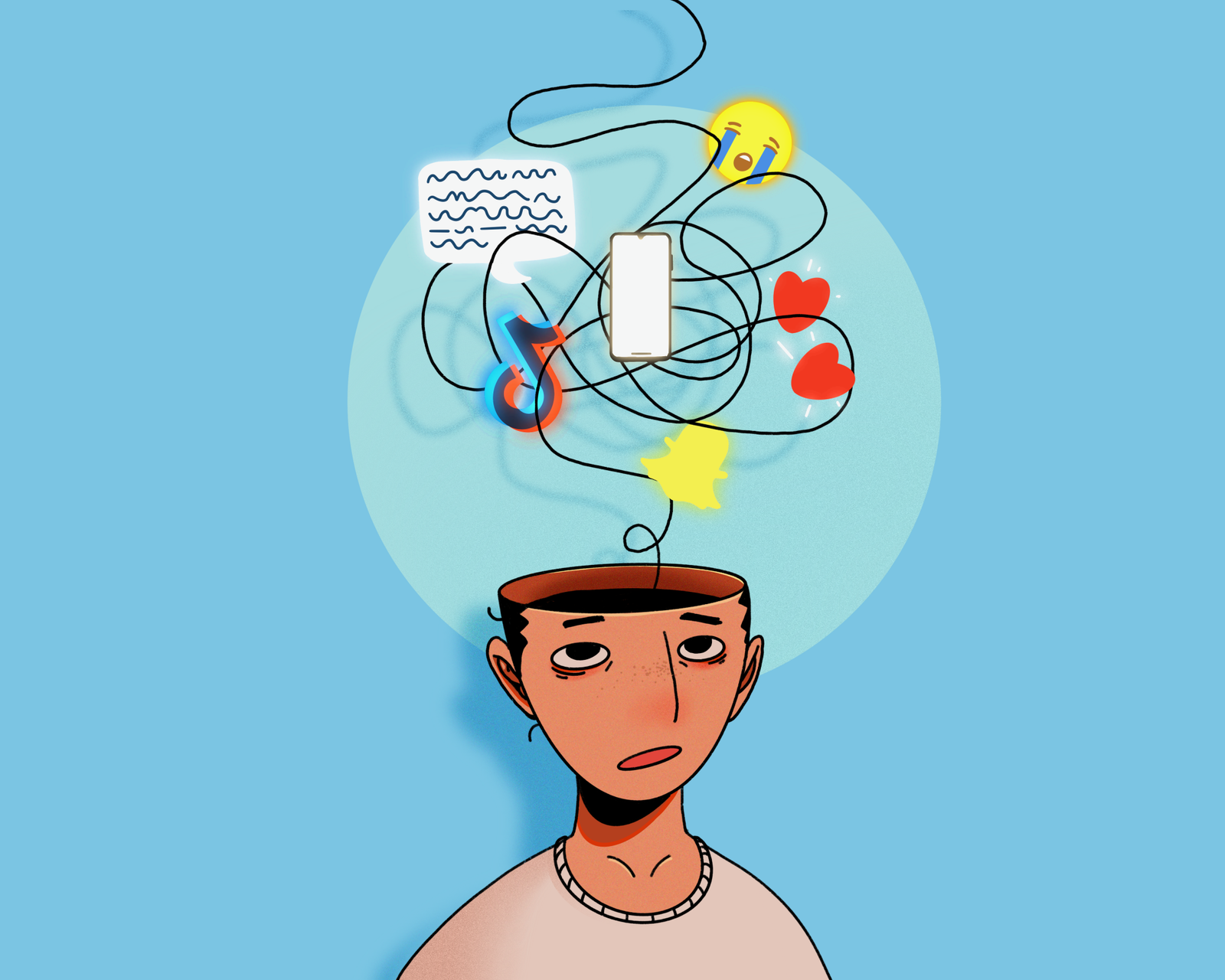
Over the last couple of years, we have found ourselves, having to grapple with something that we never ever thought we would have to admit to — we were, and have been addicted to tech for many years. We could not tell you precisely when it began, just that we know how difficult it has been to unplug ourselves from our devices. Here’s the funniest thing, after everything that we’ve been through in recent years (more so in the past year), we have come to understand now that our devices/screens were never truly the root cause of our own tech addiction. It was the online platforms (and how they’ve been engineered) that were truly the source of our own tech addiction.
Tech addiction, like every other addiction, affects each of us differently. It is a spectrum. Some of us could be a lot more addicted to social media than others. Personally, we do find some comfort in knowing that our addiction wasn’t as serious as others that experience it too.
The thing about tech addiction is that it didn’t just affect Gen Zs. It affects adults too. Truth is, none of us were spared from the frictionless, addictive design patterns of modern-day social media & networking platforms. The sooner we can come to terms with that reality, the sooner we can start to take the necessary steps to address our own addictions.
Unplugging and focusing on what truly matters.
On the professional front, this moment has reminded us of a time before social media platforms came along. While the internet in general has empowered us in so many different ways (much of it for the better), it has also created a sense of loss for many. For many of us today, we seem to have lost that ability to sit down for hours on end to read a book, and for others, it was the loss of our social skills, or our ability to make meaningful, real-world human connection, and for some, it was truly a loss of their sense of self.
As we begin to entertain a life beyond such online platforms, the one thing that we are really looking forward to is being able to channel more of our attention and energy towards our craft and the work that we want to do. And beyond that, it also helps to know that our craft has always had the natural tendency to attract the kind of meaningful human connections that we’ve always valued before.
There’s no doubt in our minds — this decision to fully disconnect from LinkedIn is going to feel strange for a little while. Yet, at the very same time, we also know that we won’t be losing any sleep over it. Quitting LinkedIn isn’t a loss for us. In fact, perhaps for the very first time in 13 years, we are finally able to get back much of that agency that we had lost over the years.
Leave a Reply