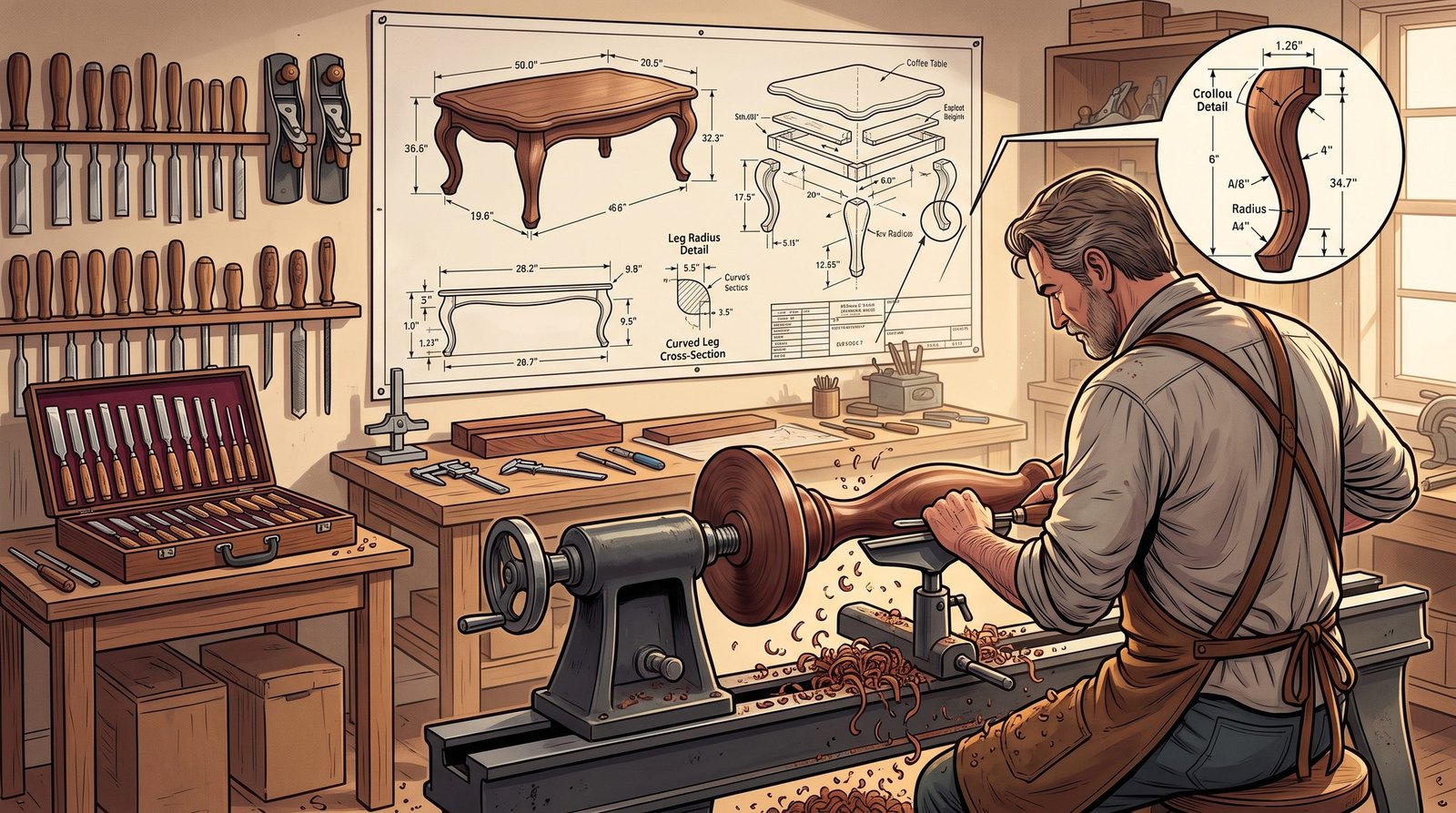

We are a multi-hyphenate. We are an inventor, a designer, an engineer, an architect, a builder, a mentor, but most of all, a master craftsman. We have spent the past two decades of our career pioneering a field of our own, now popularly known as “Design Engineering”. During this journey, we have also helped to pave the way for what modern UX will eventually become.
At present, we are based in Singapore, but we also operate internationally.
If you like to find out more, you can read more about us below.
More About Us…
How our journey began
We began our career back in the mid-2000s. And very early into our career, we immediately encountered a serious gap in the world of web (and later, digital) experiences. As someone that was drawn towards the latest tech gadgets at that time, we were among the very first to be exposed to what it was like to browse a website within a tiny mobile screen. That incident happened all the way back in early 2006. That was the very moment that we knew, “UX would be really important some day.”
Sure, we did not call it “UX” back then. In fact, back then, there wasn’t even the language for what it is today. Most in the industry, especially in our side of the world, we only called it “usability”, or “user-friendly design”. Sure, the term might’ve already existed in the US by then, but where we are, it hasn’t quite reach us yet.
Over the next several years (between 2006 to 2009), we would take on several freelance consulting gigs, and with those experiences, it led us to crafting and engineering the earliest forms of friction-led design patterns. For the uninitiated, they can also be called “visual indicators”.
We saw, very early on, that the web experience was getting more and more complex, along with more and more information that would be “dumped” onto the average user. And so, we knew that there has to be a better way to introduce the necessary friction-points in order to create more agency for the users themselves.
Today, in a post social media world (especially with tech addiction), these friction-led design patterns/principles have become even more relevant, and in-demand.
Where we’re currently heading…
Rise of AI
We are living through what may be the most consequential shift the digital world has seen since the internet itself. AI is no longer a novelty sitting at the edges of how we work — it is actively reshaping how we think, how we learn, and how we build. Entire workflows that once took years to master are being compressed, questioned, and in some cases, reinvented outright.
However, despite the incredible capabilities of LLMs today, it is abundantly clear that these AI models still fall short in other areas, especially the ones that involve human intelligence and empathy. While today’s LLMs are great at performing certain well-defined, limited scoped tasks, it does not have the ability to judge if an idea is sound, or whether or not a design resonates with the user’s vision of what they are trying to build. At the time of writing this (Sep 2026), AI is great for the “doing” part, but not the “why we should do it?” parts. That second part will always need a human to make that judgment call.
Choosing Mastery and Craftsmanship
Early in our career, when most of our peers would choose the more acceptable (likeable) pathways like management, content creation, or academia, somehow, deep-down, we knew. We knew that we wanted to follow a slightly different path. Before there was AI, we had to learn to work with different tools. And when it comes to working with different tools, you learn very quickly that tools and technology comes and goes. It was never really about the tools, it was about the person working with it.
Over the course of two decades, we focused most of our practice on identifying and exercising a key set of skills that we believed would always be necessary, regardless of the tools, framework, or technology that comes along. Today, those very same skills have also been coined by multiple experts across countless new interviews and podcast episodes.
This list of craftmanship skills include:
- Critical Thinking
- Problem-Solving
- Systems Thinking
- Empathy
- Human Taste (Judgement)
- Communication Skills (i.e. Human Connection)
These six skills have been repeatedly touted as the most in-demand skills of the AI era.
The Pivot
For most of our career, we have found ourselves at the very center of building and working with various different Content Management Systems (CMS). In fact, you could also say that it was really our “bread-and-butter” for close to 80% of everything that we have been a part of. Sure, there were other varieties of projects that we had also worked on as well, spread out across the different sectors. But at the very core of those projects, there is [almost] always one central theme, and that central theme was CMS.
Our journey into CMS started all the way back in the early 2000s when blogger.com first arrived on the scene. This was before CMS was called CMS. There was no language for it yet, but we were there, at the very beginning. Over the course of our career, we got to witness the evolution and growth of the domain into what it has become today.
At the very same time, when we look at where AI is today, we noticed the similarities between where AI (as a technology) is right now, versus where blogger.com was back in the early 2000s. Right now, at the time of writing this, AI is still fairly young, and the road ahead isn’t one that is predetermined.
Being in a Position to Shape the Future of AI Experiences
And this is where we see ourselves having that advantage to help shape the future of AI experiences. We have seen what happens when a technology is allowed to keep advancing but then it doesn’t involve the most important aspect – the human experience.
We’ve watched this play out firsthand with the rise of social media — an entire generation of frictionless design patterns built to remove resistance at every turn, the very opposite of what we believed in. The cost of that choice is something we’re only now beginning to reckon with as a society.
Which is exactly why, this time, we want to be at the table from the start.
Right now, AI as a domain doesn’t quite have its sub-domains yet. By that, we mean the different categories of applications. CMS as a parent domain eventually paved the way for other sub-categories like CRMs (Customer Relations Management Systems), and LMS (Learning Management Systems), just to name two.
And because AI is still young, we saw it as an opportunity to position ourselves within this space. With our experiences as a pioneer and having created friction-led design patterns that went on to shape the digital experiences for many people, we see it as both a personal and professional responsibility to take on that challenge — to be on the edge of what Human-AI experiences will be like and eventually help to shape those future experiences for millions of people.
This is How We See AI Shaping the Way We Work (as of 2026)
From our personal and professional perspective, we believe that there are two main parts of this topic:
- How we attract/find work.
- How and when to work with AI, or without it.
Attracting/Finding Work in the Age of AI
For the very first part, we are increasingly convinced that now that AI has raised the entry level of what ordinary folks can do — turning ideas into working prototypes — it has made a lot of our past works less relevant in today’s industry requirements. This is not to say that our past accomplishments and experiences are no longer valuable. They still are. But we also think that there will be a shift. There will be a much greater emphasis now on what we can do today, and more importantly, what we’re currently working on, than talking about what we had done in the past.
While a lot of companies and organisations have yet to catch up to it, we believe that it is only a matter of time before they start to understand and realise that the real value of hiring someone in this era, is to find someone who knows how to work with the technology while also offering a window into where they are heading with the new technology. Think about this question, “Where will you be (with AI) in the next 3 to 5 years time?”
Exploring & Discovering How and When to Work with (or without) AI.
This next part is going to be more long-term. Moving away from the loudest online noises right now, we would say that we are among the 80% of people that are navigating a brave new world with AI in the mix. We feel the stress and pressure of change coming. We know that we have to somehow learn to live with this new technology. Refusing it would only mean falling behind, and eventually being irrelevant in the next decade or so. That is not an option for the majority of folks like us.
So, rather than fear the technology, we (personally), have decided that we would embrace it and put ourselves out at the very edge of it. But at the very same time, we also want to maintain a grounded perspective on how AI could/would shape the way that we work (years from now). Technology innovation has always had a longer tail when it comes to mass adoption and acceptance. Think the internet — it might have had a dot-com boom in the mid-1990s to late-1990s, but it didn’t see mass adoption until after the mid-2000s to early-2010s.
What we want to do is to position ourselves out front. Main reason is because we know that when the time comes for mass-adoption, most folks are going to need time to adapt mentally and emotionally around how to work with the technology. By choosing to be out in front now, it allows us to essentially eliminate that “mindset shift” duration. When AI is finally ready for real mass-adoption, we would already be ready, primed for it.
In the meantime, we will continue to document our experiences and journey. We will write about what we have tried, when we make mistakes, and what those lessons were, and eventually, you will find a track record of our experiences over the next decade and longer. For us, maintaining this archive (a set of records) is less about trying to create a perfect perception, and more about staying honest and true. That is the only way that this is going to work for us.
Finally, Here’s Where We Stand on AI (as of 2026)
As of September 2026, the global conversations surrounding AI has been nothing short of polarized. There’s one group that is on the other end of the spectrum, constantly spreading messages about the downfall of humankind, and how AI is going to wipe out humanity in X number of years. And then on the other end of the spectrum, we have those that have bought fully into the Silicon Valley hype machine, and they are simply living within their own hyped bubbles regarding “how great AI is”.
You should know where we stand on this issue. And where we stand right now is that we see ourselves more as a pragmatic optimist when it comes to the future of AI, as well as the technology’s place among human beings. We are both mindful of the potential risks that unchecked AI can pose on human life and human experiences in general, while also being aware that AI (even by today’s standards) are already capable of amazing feats.
While both sides of the argument have their merits and truth, we prefer to take a more grounded lens when it comes to the kinds of conversations we want to have around AI in general.
From a UX perspective, we believe less in the “humankind ending” messaging, and perhaps more towards the very real possibility that if AI advancement isn’t balanced with more human-led design principles, it could lead to a run-off situation where the technology is extremely capable, but only a small handful of people would have access to its capabilities while the rest of humanity gets left behind.
From a master craftsman perspective, we do not believe that AI agents would eventually replace human workers either. Some of the things that truly make us humans are still the very same things that an AI would never be able to replace or replicate. Well, not yet at least. Maybe give it another 500 years or so, and we shall see 😜.
What We’re Working On
At the present moment, we have a couple of pieces of personal work that are actively happening in the background. If you have already scrolled through our blog feed on the home page, or visited one of our post archives, then you would have noticed one of them — the Forge.
As for the rest, we’re intentionally holding things back for now. Right now, our reasoning is that all of this — Forge included — is still in its early stages, and until we have something with more substance to share, we’ll keep the rest under wraps.
If you like to know a little bit more about those works, we’ve prepared some summaries over on our “Our Works” page.
Our Achievements
- Helped to pioneer the creation of numerous friction-led design patterns.
- Helped to establish several of the best practices in the design engineering field (also appears to be future-proof for the AI era).
- Recognised as a thought-leader in the fields of UX since 2016.
- Recognised as one of the top global voices in UX since 2025.
- Recognised as an industry pioneer since 2025.
Current Collaborations
- Progress (Telerik) Champions (2015—2018, 2024—Present)
- UXPin (2018—Present)
- GitKraken (2018—Present)
What We Offer
We want to lead with the potential value we bring, not our rates. Too many conversations get anchored on cost before there’s ever a clear sense of the problem being solved, or the kind of impact that’s actually possible.
That said, we also want to draw a clear boundary and set the right expectations upfront: working with us isn’t just a matter of meeting our fees. What matters more to us is whether there’s an alignment of vision, values, and ideas — work that presents a genuine challenge, or has real potential to make a positive impact on the people it’s meant to serve. That’s the bar we measure against, not a budget line.
With that in mind, here’s what we currently offer:
Consulting:
- We work independently as a consultant, taking on projects as the right opportunities come along.
- Rates: USD 700/hr (weekdays) / USD 1050/hr (weekends)
Apprenticeship Programs:
We offer this independently as a consultant, when the opportunity arises. We’re also open to being fractionally embedded within a company — joining a team to help drive their in-house apprenticeship program, either on a permanent or contract basis.
Contractual F/T Work:
It is also clear to us that, in today’s job climate, many companies are also facing uncertainties, and are less likely to offer traditional full-time roles. Especially with how fast AI appears to be progressing at the moment. 9 out of 10 roles we see posted on job listing sites today are contractual roles (i.e. between six months to a year). We are also open to considering such work opportunities should they present themselves.
If any the above work arrangements matches something that you are also looking for, you can drop us an email at wearehere@masterdannychen.pro.